2022 – 2032: "A Decade of Supernatural Growth and Multiplication of the Church." We embarked on a 10-year human capital campaign to train, equip and send out 360 Christian ministers to reach out to less reached communities and people groups to bring up the harvest for Christ.
One of the greatest challenges facing the Body of Christ today is the tendency among some ministers to exalt themselves above others.
They may be gifted in one particular area and mistakenly assume that their gifting grants them authority over the entire Body of Christ. But Scripture reminds us clearly that we are many members, yet one Body (Romans 12:5; 1 Corinthians 12:12; 1 Corinthians 12:7-11, Ephesians 4:11). No single individual carries the fullness of Christ’s ministry—we are each only a part of the whole Body.
Sadly, those who may not operate in certain gifts of the Holy Spirit sometimes discredit or even seek to silence those who do. This is not the way of Christ.
Church, it’s time for us to wake up!
It’s time to recognize and embrace every gift the Holy Spirit has given to the Body. We will only reach the world for Christ when we honor and work with each other, not silence one another.
You may be a gifted teacher—praise God! But acknowledge that you are not necessarily a gifted evangelist.
You may be an anointed pastor—thank God! But recognize that others may carry the prophetic mantle you do not have.
You may be a gifted prophet—glory to God! But understand that you may not carry the apostolic mission or calling.
We need each other. Let’s walk in humility and unity, honoring every gift and grace within the Body of Christ. Let’s build together, not break each other down.
As the Apostle Paul wrote, “I planted, Apollos watered, but God gave the increase” (1 Corinthians 3:6). This is the faithful and true model of ministry we must return to—a ministry of collaboration, humility, and divine partnership. Each servant of God has a role, but it is God alone who brings the growth.
Let us honour one another’s assignments and work together in unity, knowing that no role is greater than the other, and all are essential in fulfilling Christ’s mission on earth.
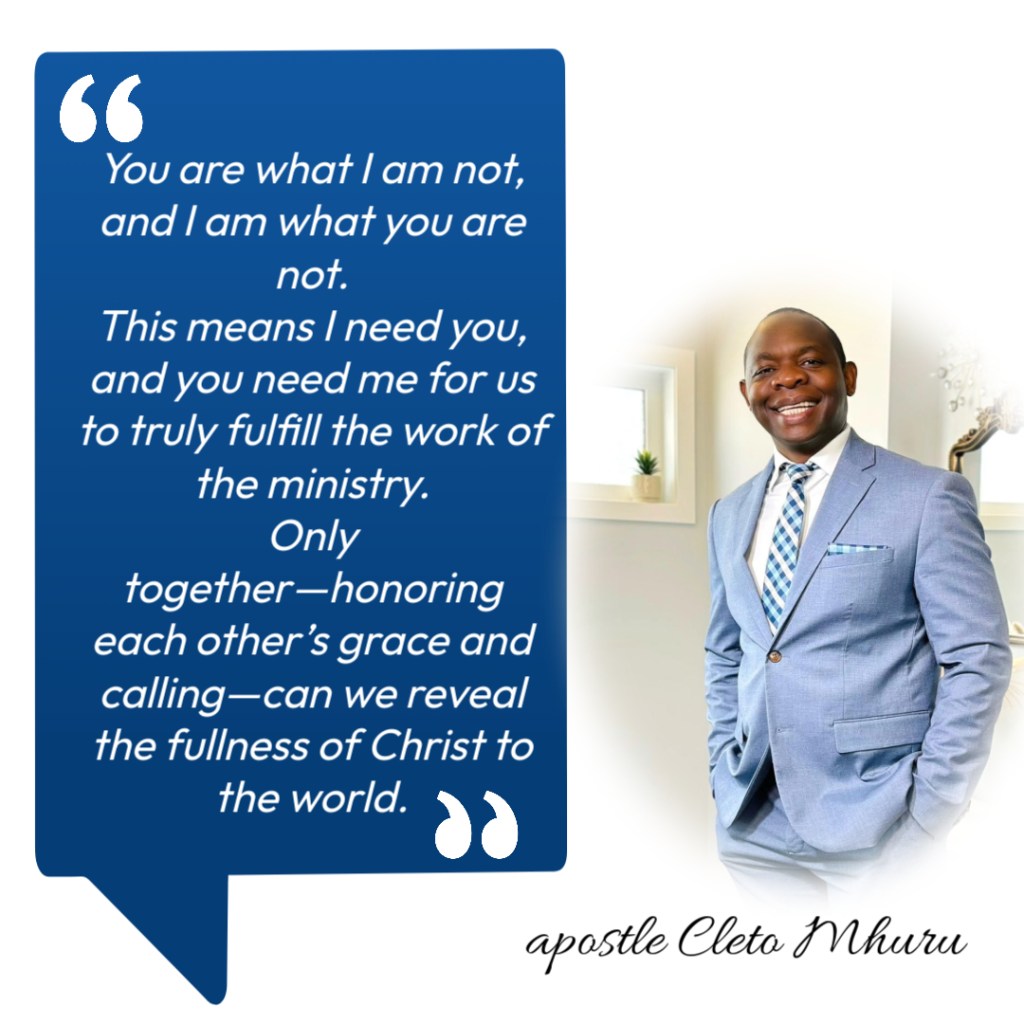
You are what I am not, and I am what you are not.
This means I need you, and you need me for us to truly fulfill the work of the ministry. Only together, honoring each other’s grace and calling, can we reveal the fullness of Christ to the world.
What is isolation? Isolation is more than just being alone; it’s a state of complete separation from others, a feeling of solitude that can either be positive or negative.
Positive isolation, as we can see in the life of our Lord Jesus Christ, involves moments of seclusion for prayer and fasting. In the Gospel of Mark 1:35, it is written, “In the morning, while it was still very dark, he got up and went out to a deserted place, and there he prayed.” Likewise, in Luke 5:16, we learn that “Jesus Himself would often slip away to the wilderness and pray – in seclusion.” Matthew 14:23 tells us, “After He had sent them away, He went up on the mountain by Himself to pray.”
Negative isolation, however, can lead to foolishness, as Proverbs 18:1 wisely states, “A man who isolates himself seeks his desire; He rages against all wise judgment.” This separation from others can lead to a pursuit of selfish desires, and a rebellion against sound judgment and wisdom. Negative isolation leads to pursuing selfish desires and the result is destruction (sin – suicide).
What causes this isolation, you may wonder? Life’s challenges can often push us towards isolation, making us feel like we no longer fit in with others. When you hear stories that make you feel unfit, the temptation to withdraw and be alone can be strong. It’s crucial to recognize this tactic of the enemy, for just as a lion isolates a buffalo from its herd before attacking, the devil seeks to isolate us from others or our support groups before destroying us (physically or spiritually).
In our church assemblies, we must have support groups that are ready to be attentive to meet other people’s needs. Our church groups should be ready and willing to help those who are hurting, suffering, or facing challenges. Let us not merely say, “I will pray for you,” but instead, let our groups take active steps to assist where necessary. Galatians 6:2 says, “Bear one another’s burdens, and so fulfill the law of Christ.” We need to be practical. James says, “If a brother or a sister is naked and lacks daily food, and one of you says to them, ‘Go in peace, keep warm and eat your full,’ and yet you do not supply their bodily needs, what is the good of that? Faith by itself, if it has no works, is dead.”
Instead of going into isolation, share your difficult experiences with others or a group. In doing so, you will discover that others have faced and overcome similar challenges, or you may find companions who are in the same boat. This sharing is where healing begins. As you open up, you’ll receive guidance on overcoming difficulties, discover resources to aid you, and experience the power of collective prayer and spiritual support.
So, my dear brethren in Christ, I urge you not to isolate yourself when facing life’s trials, temptations, and challenges. Whether you are dealing with HIV/AIDS, cancer, chronic sickness or disability, or stress or depression; remember that you are not alone. Do not listen to the voice telling you that you are not loved. Do not listen to that voice telling you to go into isolation and be alone. Listening to such voices is what Solomon is calling folly in Proverbs 18. Instead, share your burdens with others, for in unity, we find strength, healing, and the unwavering support of our faith community. Let our groups be healing homes for those who are hurting.
I found the cure for poverty from the Wisdom of Solomon (Proverbs 10:4-6, NCV). Let me read it to you: “A person who is lazy will end up being poor, but a hardworking individual will become rich. Those who gather crops on time are wise, but those who sleep through the harvest are a disgrace. Good people will receive rich blessings, but the wicked will be overwhelmed by violence.”
I have realized that not everything can be solved through spiritual means. Certain things require practical action. Poverty can be overcome by working hard, not by praying all night or going into seclusion in the mountains for days. Laziness leads to poverty, whereas hard work leads to prosperity. Beware of prosperity gospel preachers who ask for seed money or other offerings for you to prosper. This kind of gospel is not only cheap but also irrelevant when it comes to genuine Christian theology. Prosperity gospel that doesn’t encourage people to work with their own hands is simply exploitation. It is a selfish gospel that only benefits the minority who are disguised as sheep yet are ravenous wolves.
“My dear brethren, we must remember that money doesn’t grow on trees. Instead, we need to learn to work with our own hands. I closely follow the teachings of apostle Paul, who emphasized the importance of hard work. In Acts 20:33-35, Paul stated, “I have not coveted anyone’s silver or gold or clothing. You yourselves know that these hands of mine have ministered to my own needs and those of my companions. In everything, I showed you that by this kind of hard work, we must help the weak, remembering the words of the Lord Jesus Himself: ‘It is more blessed to give than to receive.’ ” This is an apostle speaking, not just a mere believer. Despite being mightily used by God, Paul humbled himself and worked as a tentmaker (Acts 18:3-4).” If the great apostle of the New Testament worked hard for his own needs and gave to others, how much more should we?
If we work with our hands instead of spiritualizing everything, we can eradicate poverty in our communities. Pursuing the prosperity gospel of bread leads to the exploitation of people. God commanded Adam and Eve to cultivate the land and take care of it (Genesis 2:15). We must work diligently and God will bless the fruits of our labour. Laziness and idleness should be avoided. Rather, we must find a purposeful activity that can provide us with a livelihood (2 Thessalonians 3:11-13). It is important to work with our own hands and not accept ill-gotten possessions or dirty money (Proverbs 6:6-11; Proverbs 10:4-5; Proverbs 18:9; Proverbs 13:4; Proverbs 14:23-24). We should ask God to show us a worthy pursuit that can lead to prosperity. God can open doors for us, but success is achieved through hard work (Deuteronomy 8:18; Proverbs 28:19-20; 2 Timothy 2:6-7). “Laziness can lead people into a life of begging and poverty.” (Romans 12:11-13; 2 Thessalonians 3:10-13). Let’s embrace this cure of poverty – hard work!
UNDERSTANDING FAMILY DYNAMICS IN THE LIGHT OF SCRIPTURES
The act of abandoning one’s family to pursue a higher calling is strongly depicted in Mark 1:16-20. This passage tells the story of how Simon, Andrew, James, and John were called by Jesus to follow him. This story is like the story of Elisha being called by Elijah in 1 Kings 19:19-21. In both stories, those called had to abandon their families and professions. Elisha left behind his farming profession, slaughtered his twelve yokes of oxen, hosted a farewell party, kissed his parents goodbye, and followed Elijah.
Receiving God’s call doesn’t necessarily mean abandoning one’s family and loved ones. In fact, Simon, Andrew, James, and John, who were called by Jesus, did not sever their connections with their families permanently. Rather, they accepted Jesus’ call collectively, not in isolation (Mark 1:17). Moreover, in Mark 1:29-31, we see that the four disciples visited Simon and Andrew’s home along with Jesus. There, they found Simon’s mother-in-law sick with a fever, and Jesus healed her. This implies that the disciples had opportunities to return to their family homes during their itinerant ministry. What they did give up was their previous professions, not their immediate families. In my evangelism and church planting ministry, we often spend periods ranging from one week to even a month away from our families, but that doesn’t mean we have severed our family relationships.
Following Jesus doesn’t necessarily require a complete disconnection from one’s family. However, conflicts may arise that can strain family relationships. In the Gospel of Mark, we see instances where immediate family members obstruct someone’s commitment to following Jesus. In Mark 3:20-35, Jesus encounters conflict with both his immediate family and the religious authorities, the scribes. In Mark 3:20-21, the text reads, “When the crowd came together again, so that they could not even eat. When his family heard it, they went out to restrain him, for people were saying, ‘He has gone out of his mind.'” Jesus’ immediate family, attempted to stop him, unaware that they were impeding his divine mission of preaching the kingdom of God. In response to this, Jesus redefines his family in Mark 3:33-35, asserting that those who do the will of God constitute his true family, emphasizing obedience to his teachings and active participation in his mission.
It’s worth noting that Jesus didn’t abandon his immediate family. In fact, they eventually became his devoted followers. According to Acts 1:14, Mary (Jesus’s mother) and his brothers were among those who committed themselves to prayer and became an essential part of the early Christian community. James, one of Jesus’s brothers, is believed to have written the Epistle of James. Even during his crucifixion, Jesus’s mother remained by his side (John 19:26).
As believers, we need to understand how the Gospel affects our family relationships. When we accept Jesus as our savior, it can greatly impact our connections with our loved ones. This can lead to conflicts, especially if our families adhere to traditions that are incompatible with the teachings of Jesus Christ. For example, practices such as ancestral worship, consulting the dead, soothsaying, fortune-telling, and seeking advice from n’angas are incompatible with the life of faith in Jesus Christ. It is important to remember that light and darkness cannot coexist. How can you put up with a witch or wizard despite being a family member? Following Jesus can come at a cost, and sometimes this means leaving behind our professions or cutting ties with family members who are hostile to our faith. I know I touched some grey areas here. It’s subject to discussion. Feel free to reach out for open discussion.
God calls upon people to do his work on earth, and he does not work alone. Throughout the Old and New Testaments, we see a recurring pattern of how God summoned individuals to serve and help restore humanity. Examples from the Old Testament include the lawgivers, judges, and prophets, while in the New Testament, we have the apostles, prophets, evangelists, pastors, and teachers as further examples.
Luke Bretherton, a theologian, and professor of theological ethics at Duke University, in his book “A Primer of Christian Ethics: Christ and the Struggle to Live Well” (2023) citing American philosopher Robert Adams (1937) states that a call from God is a command, or perhaps an invitation addressed to a particular individual, to act and live in a certain way.
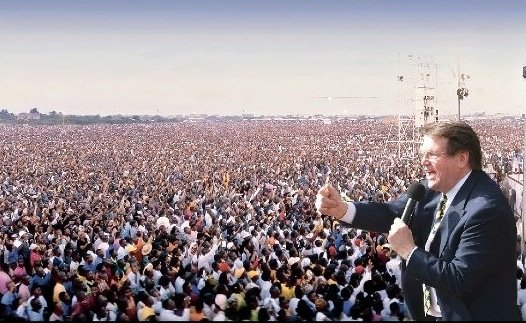
A call is like a vision statement, and God’s commands are like mission statements. For instance, I am called to be an apostle, but what kind of apostle? Paul narrowed down his apostleship to ministering to the Gentiles because that was God’s command. Similarly, someone could be called to be an evangelist, but where should they evangelize? Where is God telling them to go, and what is He commanding them to do? Evangelist Reinhard Bonnke was commanded to leave Europe and evangelize Africa, where he drew the largest crowds ever recorded in the history of world evangelism. His Millennium Crusade in Lagos Nigeria in 2000 was attended by over 1.6 million people in a single day!
A calling defines our positions as servants of God. Divine commands are God’s orders given to support and make a calling a reality. Obeying divine commands brings joy and a sense of fulfillment.
According to Luke Bretherton, “Divine commands refer to the actions that we are obliged to take or responsible for undertaking in order to fulfill our relationship with God and our fellow human beings and to participate in God’s love for creation.”
A person who has received a divine call is more inclined to respond to God’s commands than to people’s opinions and perspectives. Such a person strives to please God above all else, rather than seeking to please people.
Understanding our calling and constantly obeying divine commands makes us a bringer of good news to the lost. It brings us to a level of sacrificing our freedoms to express God’s love to humanity.
Hearing God’s call and commands
Does God tells us what to do?
A man or woman who is called by God should not rely on abstract concepts or general principles to determine their actions in life. Instead, their first priority should be to listen to and obey what God is commanding them to do in the present moment. The prophet Habakkuk serves as a great example of this. He said, ” I will stand at my guard post And station myself on the tower; And I will keep watch to see what He will say to me, And what answer I will give [as His spokesman] when I am reproved.” (Habakkuk 2:1, AMP).
We hear God’s voice differently. Some of us receive God’s divine callings and commands through dreams, visions, and prophesy – Samuel (1 Samuel 3:2-15), Joseph (Matthew 1:20-21; 2;:13, 19-20,22), Paul (Acts 9:3-6), and Peter (Acts 10:9-23).
According to Karl Barth, a well-known theologian, we primarily hear the command of God through the following means:
1. Engaging with the canon of Scripture, (2) active interrogation of what it means to participate in creaturely ways of being alive, (3) Actively participating in prayer, (4) dialogue with those from other traditions with whom a common life must be forged and in whom the Spirit may be at work, (5) Experiencing suffering or hearing from those who are marginalized and oppressed, (6) Attending to our fellow hearers of God’s Word, both past and present.
Thriving in our calling
In ministry, we can be most effective when we operate within our unique callings, talents, and capabilities. As Apostle Paul states in Ephesians 4:7, “But each of us was given grace according to the measure of Christ’s gift.” Therefore, we must function and operate according to the grace and gift given to us by God. To support the growth and benefit of the church, God has placed apostles, prophets, evangelists, pastors, and teachers within the church (Ephesians 4:11).
“There are individuals who are not specifically called into leadership positions, but they possess the gifts of the Spirit, such as the word of wisdom, word of knowledge, faith, gifts of healings, working of miracles, prophesy, discernment of spirits, different kinds of tongues, and interpretation of tongues. This is stated in 1 Corinthians 12:7-10.”
To succeed in our callings or vocations in life, it’s important to understand the significance of sticking to what we are good at – our gifting. Apostle Paul, in Romans 12:3-8, explains this concept in detail. He urges us not to think too highly of ourselves but to keep a balanced perspective and consider the level of faith that God has given us. Paul compares us to a single body that has many parts, each with a unique function. As individuals, we should work together as one body in Christ, recognizing that we are all interdependent. The gifts we have been given are diverse and vary according to the grace given to us. Some are called to prophesy, others to serve, teach, encourage, give, lead with diligence, or show compassion with cheerfulness.
To achieve success in our respective callings, we must focus on what God commands us to do and avoid becoming a jack of all trades. Prophet Joel emphasized the importance of staying true to our calling without interfering with each other:
“They run like warriors; They climb the wall like soldiers. They each march [straight ahead] in line, And they do not deviate from their paths. They do not crowd each other; Each one marches in his path. When they burst through the defenses (weapons), They do not break ranks.” (Joel 2:7-8).
Operating in this way promotes comradeship, companionship, and love. There will be no room for competition or domination because everyone’s unique gifts will be valued, and we will need each other to ensure the flourishing and well-being of our communities.
Witness the vibrant spirit of our young generation as they brought an extra dose of magic to our celebration with their breathtaking performances! 🎉 The energy and enthusiasm they brought to the anniversary celebrations were simply awe-inspiring. 👏
Special shoutout to the Drum Majorettes who took the stage by storm, turning our anniversary celebrations into a lit and unforgettable experience! 🔥✨
It’s heartening to see the future of our church in the hands of such talented and passionate youth. Let’s give them the recognition they deserve and delight in their thriving contributions! The future of the ministry is in their hands. Let’s groom them and give them the platform lest they will spend such energies elsewhere🙌 #YouthInAction #ChurchCelebration #FutureLeaders
Bishop Laz Chetty Preaching on Story of Talents: Kingdom Culture.
Matthew 25:21 “His lord said to him, Well done, good and faithful servant! You have been faithful over a few things; I will make you ruler over many things, Enter into the joy of your lord.”
As Zimbabwe prepares to vote for its next president, there is a palpable sense of anticipation. The question on everyone’s mind is who will lead our country for the next five years. Will it be the charismatic Nelson Chamisa of the Citizens Coalition for Change (CCC), or the stalwart of ZANU-PF, Emmerson Dambudzo Mnangagwa? As a spiritual leader, my role is to encourage people to make their decision thoughtfully and prayerfully. Regardless of the outcome, we must accept that whoever assumes power has been placed there by divine will. Let us pray for peace throughout the election process and a peaceful transition of power if necessary. As Zimbabweans, we must remain united and vote wisely for the good of our beloved country.
Nelson Chamisa
Citizens Coalition for Change (CCC)
Emmerson Dambudzo Mnangagwa
ZANU – PF
1 Timothy 2:1-3 "Therefore I exhort first of all that supplications, prayers, intercessions, and giving of thanks be made for all men, for kings and all who are in authority, that we may lead a quiet and peaceable life in all godliness and reverence. For this is good and acceptable in the sight of God our Savior, who desires all men to be saved and to come to the knowledge of the truth."
Samson is the last shophet (judge), and the most prominent warrior empowered and enabled by the spirit of the LORD in the book of Judges. Compared to Othniel, Gideon and Jephthah who only had one scripture reference of the spirit of the LORD coming upon them, there are four references for Samson:
Judges 13:25 “The spirit of the Lord began to stir him in Mahaneh-dan, between Zorah and Eshtaol.”
Judges 14:6 “The spirit of the Lord rushed on him, and he tore the lion apart barehanded as one might tear apart a kid. But he did not tell his father or his mother what he had done.”
Judges 14:19 “Then the spirit of the Lord rushed on him, and he went down to Ashkelon. He killed thirty men of the town, took their spoil, and gave the festal garments to those who had explained the riddle. In hot anger he went back to his father’s house.”
Judges 15:14 “When he came to Lehi, the Philistines came shouting to meet him, and the spirit of the Lord rushed on him, and the ropes that were on his arms became like flax that has caught fire, and his bonds melted off his hands.”
Like Samuel the prophet, God prepared Samson to be a saviour and warrior for Israel from birth. The angel of God predicted his birth, and his parents dedicated him as a Nazarite to Yahweh (Judges 13:3-5). He is to be a Nazarite of the LORD commissioned to deliver Israel (Judges 13:5).
The spirit of the LORD moved Samson into action. The four scriptures referencing the spirit of the LORD coming upon him use the terms stirand rushed. This shows that Samson had no control over the coming of ruah (or the spirit of the LORD) upon him. He was controlled and moved into action by the spirit of the LORD each time a situation called for such action. The first instance mentions that Samson was stirred by the spirit of the LORD in Mahaneh-dan, between Zorah and Eshtaol. He was stirred and led to come down to Timnah where he found a Philistine woman whom he desired to marry (Judges 14:1-4). This shows that the spirit of the LORD was starting to lay the groundwork for Samson to begin overcoming the Philistines and delivering Israel.
In the second instance, the spirit of the LORD rushed upon Samson when he was attacked by a lion on his way to Timnah to take his Philistine woman. With his bare hands he tore apart the lion into pieces as one could tear a kid (Judges 14:6). Upon his return from Timnah, he found the lion carcass filled with bees and honey. He took the honey and ate it with his family (Judges14:8-9). The killing of the lion did not make sense at this stage until the next episode when his wife disclosed the answer of Samson’s riddle “Out of the eater came something to eat. Out of the strong came something sweet” (Judges 14:14). The person who explained the answer to the riddle correctly was to be given thirty linen garments and thirty festal garments. Samson was enraged after his wife disclosed the answer to her people. It was then for the third time that we hear that the spirit of the LORD rushed on him, and he killed thirty men from Philistine, city of Ashkelon (Judges 14:19). Samson took their garments and gave them to the people who explained the riddle.
In the fourth direct instance of the spirit of the LORD ‘rushing’ on Samson, the ropes tying him became like flax that has caught fire, and his bonds melted off his hands. With a donkey’s jawbone, he killed a thousand of Philistine men (Judges15:14-15). His kinsman had tied him with ropes and wanted to hand him over to the Philistines to avoid trouble.
Finally, the last episode in which Samson killed three thousand men and women of the Philistines including their lords (Judges 16:27) points to the empowerment of the spirit of the LORD upon him. His last prayer to the LORD points to this: “Then Samson called to the LORD and said, ‘Lord GOD, remember me and strengthen me only this once, O God, so that with this once act of revenge I may pay back the Philistines for my two eyes.’And Samson grasped the two middle pillars on which the house rested, and he leaned his weight against them, his right hand on the one and his left hand on the other. Then Samson said, ‘Let me die with the Philistines.” He strained with all his might, and the house fell on the lords and all the people who were in it. So those he killed at his death were more than those he had killed during his life” (16:27-30).The prayer shows that Samson relied on the spirit of the LORD for strength. Secondly, his ability to push the two pillars holding the temple was extraordinary. This is evidence that the LORD’s spirit energized him with ‘ecstatic power’ to perform a supernatural feat in delivering Israel from its enemies.
Samson did not need an army to fight Israel’s enemies. He was Israel’s own army. Through the spirit of the LORD upon him, he single-handedly tore apart a lion (Judges 14:6), killed thirty Philistines in Ashkelon and took their garments (Judges14:19), broke the ropes tied on him and killed a thousand Philistine men with a donkey’s jawbone (Judges 15:14), and lastly, in his death, he killed three thousand men and women of Philistine including their lords (Judges 16:30).
The church today should not look at what human beings could do; rather, it should give room for the Holy Spirit to lead the way. In this way, the church could be in a better position to witness great salvation feats in these end times. The God whom we meet in the book of Judges is the same God who acts in Christ for our salvation. This work of salvation is progressive until the Jesus’ second coming, therefore, believers we still need the partnership of the spirit of the LORD to achieve God’s purposes of salvation on earth today. It is not something that can be achieved by our natural might nor power, but by the spirit of the LORD (Zechariah 4:6). The fact that some of the Old Testament judges’ names are listed in the hall of faith in Hebrews 11:32-34, believers today should imitate their faith to please God (Hebrews 11:6).
With the Holy Spirit, the ruah or ruach of Yahweh (the Spirit of the LORD), we can do great things for salvation and deliverance on earth during our time. Welcome Holy Spirit! Amen!
“The times of God’s refreshment are upon us. It brings jubilation and joy among the saints who wait upon the LORD. We do not need to think about how breakthroughs in our lives will come about. It is through obedience and trust that we are going to enjoy these abundant blessings from the LORD.” Cleto Mhuru
Bible Reading: Jeremiah 1:12And the word of the LORD came to me, asking, “Jeremiah, what do you see?” “I see a branch of an almond tree,” I replied. “You have observed correctly,” said the LORD, “for I am watching over My word to accomplish it.”
This is what God says to believers. There is cleansing, sanctification and purification coming to the church. This is a cleansing similar to what David desired in Psalms 51:7 when he cried out to God saying, “Purify me with hyssop, and I will be clean; wash me, and I will be whiter than snow.” This cleansing refreshes the believers. It’s a time of refreshment for the church from the Lord (Acts 3:19). LORD’s refreshing brings blessings of health, revival, and prosperity. It is an exciting experience that causes the saints to prosper in all things in the same way we prosper in our souls (3 John 1:2). Imagine how you feel after a “good” shower or bath! This is exactly what believers will experience as a result of this refreshing from the LORD.
There is jubilation and joy among the saints who wait for the LORD. Like the disciples in Luke 5:1-11, you could have toiled the whole night trying to catch fish but caught none. Jesus came and asked them to use their boat. After teaching the multitudes of people from the boat, he asked the disciples to launch their nets into the deep. There was a big catch of fish. The disciples were amazed and jovial at the same time. This is what this refreshing time is all about. God will amaze us with his goodness. We do not need to think how breakthroughs in our lives will come about. The disciples believed and obeyed Jesus’ command to launch their nets into the deep and the result was a big catch of fish. In obedience and trust we will enjoy these abundant blessings from the LORD. The LORD had this message to Cyrus through prophet Isaiah, “I will go before you and make crooked places straight; I will break in pieces the gates of bronze and cut the bars of iron. I will give you the treasures of darkness and hidden riches of secret places, that you may know that I, the LORD, who call you by name, Am the God of Israel” (Isaiah 45:2-3). This same prophetic message speaks to us today. The times of refreshing are opening up closed doors and bringing in hidden treasures and riches for God’s glory through us, his saints. This speaks of all types of blessings including financial breakthroughs that have been deemed impossible in a lifetime. God is making it possible in these refreshing times. Amen!

























 Break Free Ministries International